
Your morning update from Salon.
Crash Course subscribers can join the conversation. Click the speech bubble to leave a comment. Tap the heart to leave a like.
Today’s top story …

Fox News snubs Trump’s election fantasy after learning expensive lesson
The network keeps sidestepping the president's primetime attempts to relitigate the 2020 election. Read more.
Make me smarter …

Can Andy Burnham save Britain? Wait, what would that even mean?
Ever since Brexit, the UK has been on a downward economic and political slide. Can improved vibes really fix that? Read more.

Homeric Grok…
Like everyone who worked for The Messenger, I worked there only briefly.
The start-up from Jimmy Finkelstein, founder of The Hill, was launched as a supposed corrective to the partisan capture of the major news-reporting organizations. To Finkelstein, apparently, CNN’s hearts bled too much and Fox News was too paranoid. He told the New York Times in 2023 that he wanted to bring back a time when Americans could trust the objectivity of news programs like “60 Minutes.” (Note from the future: Ha!) The Messenger was his play for the prestige of Mike Wallace.
The Messenger launched like a lead balloon and quickly found its view from nowhere had no audience. The traffic numbers were dire and a grueling publishing schedule forced on dozens of journalists couldn’t brute force a boring site into the public consciousness. If Americans managed to hear about the outlet at all during its short life, it was likely as a byword for disaster.
The publication was scooped on the news of its own closing, with hundreds of employees finding out they’d lost their jobs in the pages of the Times.
That lack of anything to say was not the only reason Finkelstein’s start-up failed. A revenue model based around programmatic ads was troubled from the outset. Wildly expensive and largely empty offices in D.C., Florida and New York were a weight around the company’s neck. But it certainly didn’t help matters. As dutiful readers of Salon likely know, you can get the straight news from just about anywhere. The fun stuff, the articles you actually want to read and share, come from outlets willing to take a stance.
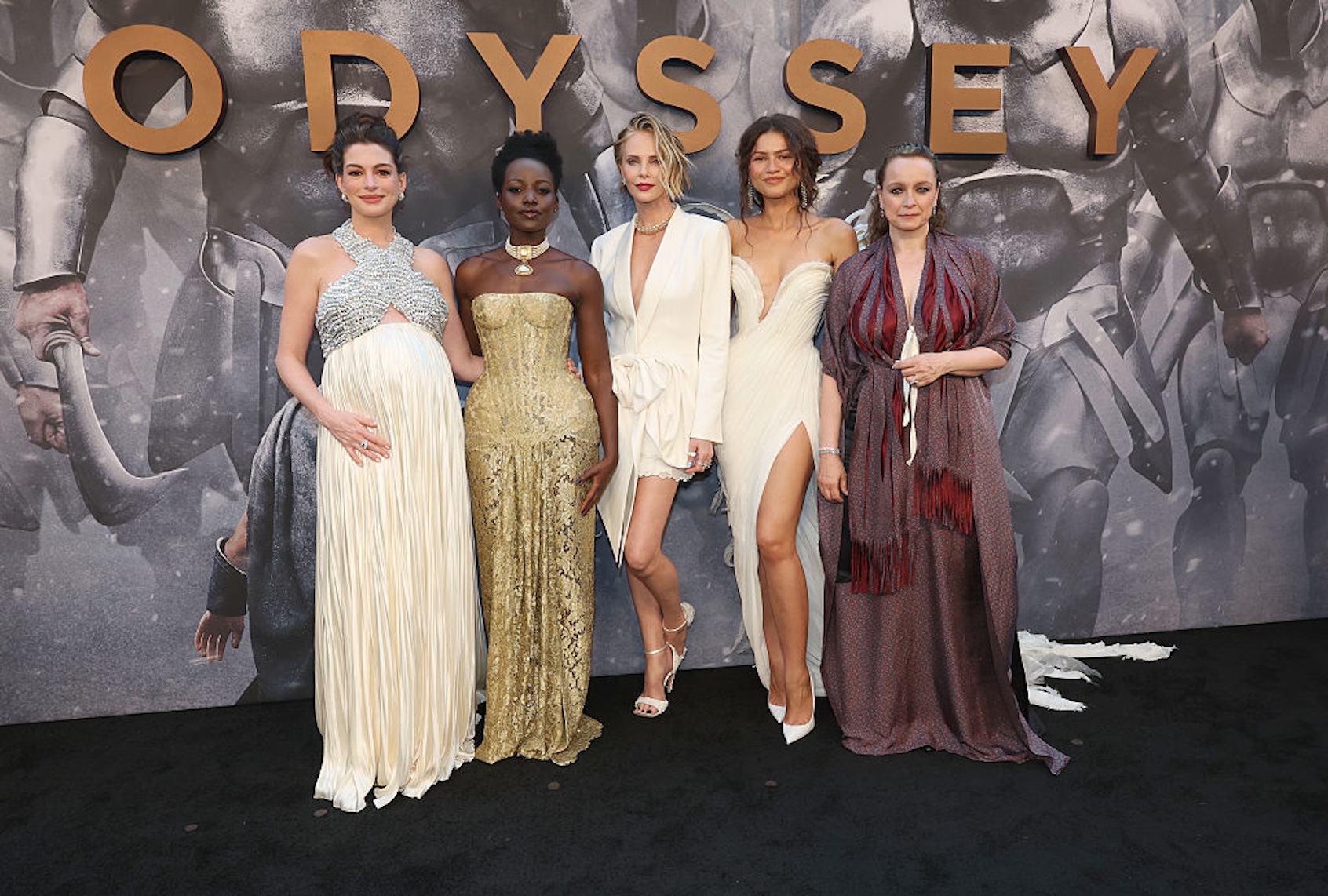
The Messenger’s sudden end kicked off a lean period in my life, a scraping, make-do era whose stresses were compounded by my looming wedding. But I haven’t thought much about Finkelstein’s pet project since the tail end of 2023, when I was once again gainfully employed. The ongoing controversy around Christopher Nolan’s “The Odyssey” in CHUD corners of the internet, and their demand for an objective retelling of Homer’s epic, snapped The Messenger back to mind.
Hearing Elon Musk call for an AI-created take on “The Odyssey” that was “historically accurate” to Homer’s vision, I couldn’t help but think about the mountains of now-inaccessible SEO sludge that were pumped out at The Messenger. Like Musk and his Grok-directed feature, Finkelstein thought there was a market for a one-to-one recreation of “the facts.” Putting aside that there are no “facts” in “The Odyssey,” that almost everyone who’s ever read it has done so in translation, and that AI can barely recreate a human hand with the right amount of fingers, it’s obvious that Musk is similarly overestimating the audience for the straight dope.

In a 2023 takedown of faithful adaptations, Vulture critic Kathryn VanArendonk came up with a ton of ways to describe cultural xeroxes. Meaningless, quixotic and doomed are good examples, though I’m partial to “creatively bankrupt” and “inevitably dull.” VanArendonk rightfully pointed out that it is impossible to translate a work into a new medium without changing some aspect of it. Deciding where to place the camera, how to dress the set and who to cast are all creative choices that have to be made by the adaptor. There’s no way to avoid those millions of little choices adding up to something like a vision for the project.
Even if Grok was able to take the real, human choices required for an adaptation out of the equation, the question remains: Who would want to watch it? Robert Rodriguez’s 2005 film “Sin City” is a near page-for-page recreation of several of Frank Miller’s comics. That devotion to comic book style is deeply dated on a modern rewatch. Gus Van Sant’s slavishly faithful recreation of Alfred Hitchcock’s “Psycho” was universally derided in 1998 and then quickly forgotten. In both cases, they just push the audience toward an unanswerable question: Why should I care about a perfect copy when I can have the real thing?
What do you think? Why are so many right-wingers obsessed with faithful recreations of books they could just go read? Sound off in the comments.
Summer Sale! Support Salon's bold journalism. Become a member and save 58%
Before you go …

House rejects one anti-trans amendment, passes two others
Four Republicans break ranks, join Democrats in rejecting NDAA amendment barring trans service members. Read more.
ALSO FROM SALON

In partnership with

Free email without sacrificing your privacy

Gmail is free, but you pay with your data. Proton Mail is different.
We don’t scan your messages. We don’t sell your behavior. We don’t follow you across the internet.
Proton Mail gives you full-featured, private email without surveillance or creepy profiling. It’s email that respects your time, your attention, and your boundaries.
Email doesn’t have to cost your privacy.
