
Your morning update from Salon.
Crash Course subscribers can join the conversation. Click the speech bubble icon to leave a comment. Tap the heart to leave a like.

The dark purpose behind Trump’s Washington makeover
The president's grand plans for the nation's capital aren't just personal monuments. They are rooted in erasure. Read more.
Make me smarter …

Trump’s pick for science director: a Silicon Valley investor with no science background
Jim O'Neill, a longevity enthusiast and vaccine skeptic, is Trump's pick to head the National Science Foundation. Read more.

It’s become second nature at this point.
Donald Trump is asked a question. He gives a rambling non-answer that somehow seems to come down on both sides, couched in the wishy-washy language of a near-octogenarian who is still deathly afraid of someone getting mad at him. He’ll close his answer with a mad veer toward whatever pet issue he last saw on his television or phone (the White House ballroom, the 2020 election, a late-night monologue). Reporters will cut and paste his words into something that sounds coherent, something that takes a stance one way or the other. Repeat until your hands swell up and rot off.
You can understand the urge to salvage Trump’s sentences. The word choices of the president were once considered important. But that was before Trump trained audiences to follow his discursive weave via years of barnstorming. Increasingly sidelined members of the press, who were barred from Trump’s meeting with Brazilian President Luiz Inácio Lula da Silva on Thursday, should see their goal as capturing as much of the absurdity and decrepitude of Trump 2 as possible. At this point, it’s more a historical than a journalistic goal. Put your audience in the room and let him speak for himself.
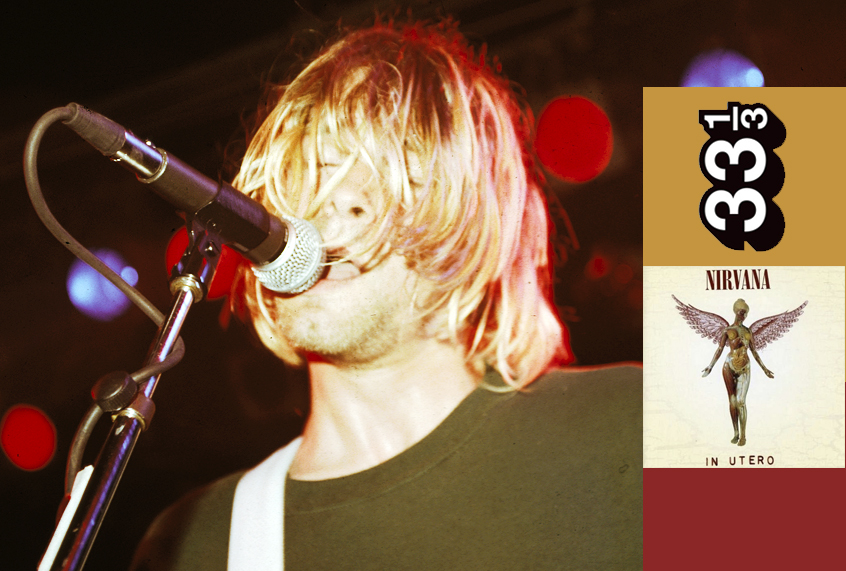
I’m reminded of Steve Albini, who died two years ago this week. The legendary producer – though he preferred the term engineer – oversaw the recording of some of the most enduring rock albums of the ‘90s. His preferred method eschewed too much post-production and emphasized capturing the real sound of a band in a room. Kurt Cobain’s raw-throated screams on “In Utero,” Pixies’ massive guitars on “Surfer Rosa,” PJ Harvey’s subterranean anguish on “Rid of Me.” All of those came through Albini’s boards before they made it out into the world with as little interference as possible.
Of course, any celebration of Albini’s no-gloss approach would be off the mark if it didn’t include his own penchant for needless provocation. Albini fronted multiple bands with unprintable names. He wrote homophobic songs and lauded black-market zines that published child pornography, as part of a prickly public persona meant to confuse and repulse. He softened in his old age, admitting that he was embarrassed by his past button-pushing, without ever asking anyone to forgive his stupidity. As a onetime journalism major, he accepted that it was all on the record permanently.
Any journos looking for a short, easy encapsulation of Albini’s work and philosophy can find it in Songs: Ohia’s 2003 track “Farewell Transmission.” Recorded by Albini in a cramped room in a single take, this wail from a dying town encourages listeners to keep pressing on through bleak circumstances while taking note of how it all looks and feels. After six minutes of economic depression and apocalyptic imagery, frontman Jason Molina leaves the audience with a forceful, repeated imperative: Listen.
What do you think? Is there still a point in trying to make sense of Trump’s rambling? Sound off in the comments.

Getty Images
5 Songs to Love Steve Albini
Songs: Ohia - “Farewell Transmission”
The Wedding Present - “Brassneck”
Pixies - “Where Is My Mind?”
PJ Harvey - “50 Ft. Queenie”
Joanna Newsom - “Emily”
Spring Sale! Support Salon's bold journalism. Become a member for just $49.
Before you go …

Trump’s “affordability hoax” may doom him
A stagnant economy and a crisis in Iran doomed one president. Donald Trump could be next. Read more.
ALSO FROM SALON

In partnership with

The IT strategy every team needs for 2026

2026 will redefine IT as a strategic driver of global growth. Automation, AI-driven support, unified platforms, and zero-trust security are becoming standard, especially for distributed teams. This toolkit helps IT and HR leaders assess readiness, define goals, and build a scalable, audit-ready IT strategy for the year ahead. Learn what’s changing and how to prepare.
