
Your morning update from Salon.
Crash Course subscribers can join the conversation. Click the speech bubble to leave a comment. Tap the heart to leave a like.
Today’s top story …

Kaitlan Collins and CNN are complicit in the Trump circus
The press didn't just cover Trump's White House Correspondents' Dinner meltdown — it enabled it. Read more.
Make me smarter …

Madison police killing shows accountability can’t stop at ICE
Corey Ruiz's death in Wisconsin shows that local police need scrutiny too. Read more.

No popular music genre despises the present as much as country music.
Through quirks of form and function, all other radio-ready music is incredibly focused on its immediate surroundings. Pop has trendiness in its very bones and its songwriters’ striving for universality tends to create songs focused on broad, current feelings: the sharp sting of a fresh heartbreak, the effervescence of new heartbreak, the joy of dancing in this club right now.
Rap music, usually made quickly by impossibly young stars for an equally young audience, tends toward today’s fashion. Micro-trends in production, slang and topics come and go quickly. Last month was another era. Last year might as well be prehistoric.
Country music, on the other hand, was born nostalgic. It came out of the urban migration of the 1930s, as a way to sell a slice of idealized past on wax to newly minted city-dwellers longing for home. Sonic trends — from the slick countrypolitan ‘70s to the neo-traditionalist ‘90s and on through the trap-indebted ‘10s — have come and gone. Demographics on the dial have shifted. Stars are younger and more male than they’ve ever been. Still, that central idea that the past was a better place to live is as persistent as the apparent blood feud between Texas and Tennessee.
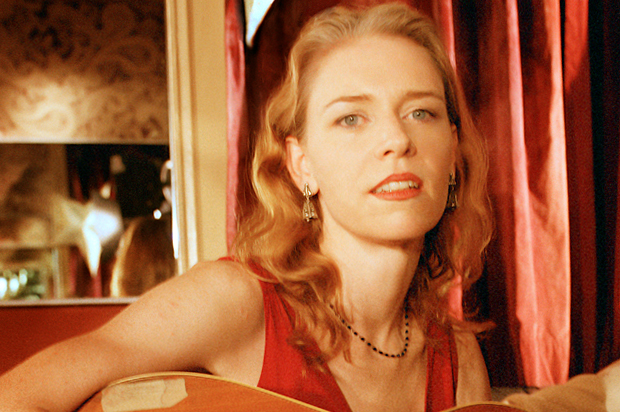
The average country listener wants to have their story misremembered for them, whether it’s the Judds asking Grandpa about the good old days or Tim McGraw missing the nebulous “back when.” The biggest hits sand down the rough-hewn edges of Mama’s metaphorical front porch to up their resale value, perhaps never funnier than on Luke Bryan’s bullet-point summer vacation on “Fish, Hunt, Golf, Drink.” All that cornpone Luddism floating around made Gillian Welch’s “Everything Is Free” feel remarkable upon its release 25 years ago.
The concerns of the track from 2001’s “Time (The Revelator)” are topical and immediate. Welch responds to the then-new phenomenon of online music piracy with practical concerns. How am I going to pay my bills if no one wants to pay me for my music? How do I put gas in the car right now? Nearly a decade before the launch of Spotify, Welch saw clearly that someone was bound to “hit the big score” off of the new model, it just wouldn’t be her.
“Everything is free now, that’s what they say. Everything I’ve ever done, gonna give it away,” she sings, before immediately shifting toward plans to make money elsewhere so that she can keep performing.
A quarter century on from “Free,” the US economy is overrun with people who believe that nothing should ever cost them. The finance industry is dominated by private equity firms that offload the debt of their corporate acquisitions onto other companies, the better to walk away clean when those companies collapse. The biggest players in Silicon Valley are building data centers to more efficiently run copyright-infringement machines built on terabytes of pirated material.
The journalism industry was hollowed out by the same forces that sliced up Welch’s catalog, leaving few journalists to report on the graft and theft this post-payment class of billionaires are carrying out across the country. Louisiana officials recently inked a secret agreement with Meta to build a five-mile-long data center in the state. The New York Times eventually sniffed out the backroom deal. The local papers were too busy covering the hors d'oeuvres at Mark Zuckerberg’s celebratory luncheon.
At the same time, the ham-fisted hollowing out of regulatory agencies by the Trump administration has had predictable results. Outbreaks of new livestock diseases, parasitic produce and slower responses to global crises followed DOGE’s wild budget-slashing. The man at the helm of that project is richer than anyone else in the history of Earth and he’s gearing up to throw millions into the 2028 elections.
It would be a stretch to say that Welch saw all that coming, but listening back now, it’s hard not to marvel at how current this then-timely track feels. You can’t help but sympathize with her desire to skip over of the coming crisis. Seeing that she’d soon be asked to work for pennies while someone else got obscenely rich, she passed. She tells the listener she “never minded working hard” but had a lot of concern about “who I’m working for.” Though she ultimately admits that she’ll keep on singing, she resolves to sing only what she wants, market demands be damned.
“If there’s anything you want to hear,” she says, “you can sing it yourself.”
Welch’s reasoning is defeatist, but inspired. Her unsentimental classic wastes no time pining or moping about a more lucrative past, leave that to hundreds of other twangy tunes. They’ve already won, she tells us, you can’t do anything about it. So, what are you going to do now?
What do you think? Sound off in the comments.
Summer Sale! Support Salon's bold journalism. Become a member and save 58%
Before you go …

JD Vance will never be the GOP Obama
He can copy Obama's biography, but the vice president will never have the charisma. Read more.

